
“I hope you brought your calculator,” I said to Sally as I slid into the chair at the coffee shop. Presidents Day meant no school, and I noticed her two children playing in the reading nook in the corner. “I didn’t realize I needed to know math to write a novel,” she said, but pulled out a notebook. “That may be a deal killer.” I laughed. “I know I said we’d talk about heroes and heroines this week, but I thought it might help to fill in the gaps of Act 2. See, last week we talked about storyflow, and I taught you how to put together what I call the bookends – Act 1 and Act 3. But these two acts comprise only 30-40% of your story. For example, for […]
Read the RestArchive | 2. Create Your Story RSS feed for this section
The I’s have it. But should they?
Ever listen to a conversation where “I” was the predominate word? I did this, I did that, I went here, I went there… I, I, I, I. After awhile, the picture is etched that the person talking is really into themselves. The same idea applies to writing in first person. As the writer and storyteller, it’s easy for us to get going in the first person narrative and forget to not let the “I’s” have it. When I started working with editor Ami McConnell, she warned me. “Watch the overuse of I.” “Hnnm, in first person?” I thought, but answered, “Okay, I’ll do that, very good idea.” Yes, it’s way easier said than done. It takes time, rethinking and rewriting to avoid the over use of I, or starting every […]
Read the Rest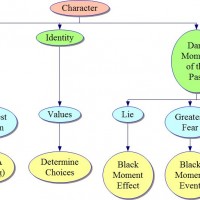
Quick skills: Character and Plotting
I’ve heard it said that the harder a book is to write, the easier it is to read. I’m not sure I agree. Yes, a book should cost the author pieces of their heart, but I’ve found that the more tangled my plot, the more complicated my character, the less popular my stories. As I’ve grown as an author and learned how to create simple yet powerful storylines and characters, the popularity of my books has also grown. As I’ve streamlined the process of plotting and characterization, the writing process has become easier, also. Sure, it’s still hard work, and still costs me pieces of my heart as I write emotion onto the page, but I know where I’m going and the plot is less tangled as I get there. The […]
Read the RestConversations: Dark Moment Plotting and how to build a story outline
“My hero lost his best friend in the war, in the bombing of Pearl Harbor. He also lost part of his leg.” My aspiring writer, Sally, slapped down the open page of a spiral notebook onto the table at the coffee shop, and slid into her chair, unwinding her scarf. Outside, the sun shone bright in a cloudless sky, adding heat to an otherwise arctic day. I picked up her notebook. “I see you’ve done your homework and discovered a dark moment in your character’s past, and then journalled about it.” “I did that. It was fun – I did the research and saw Pearl Harbor through his eyes. In his own words, he told me everything about the attack, and how his buddy died protecting him, and how he […]
Read the Rest


